
 EN
EN
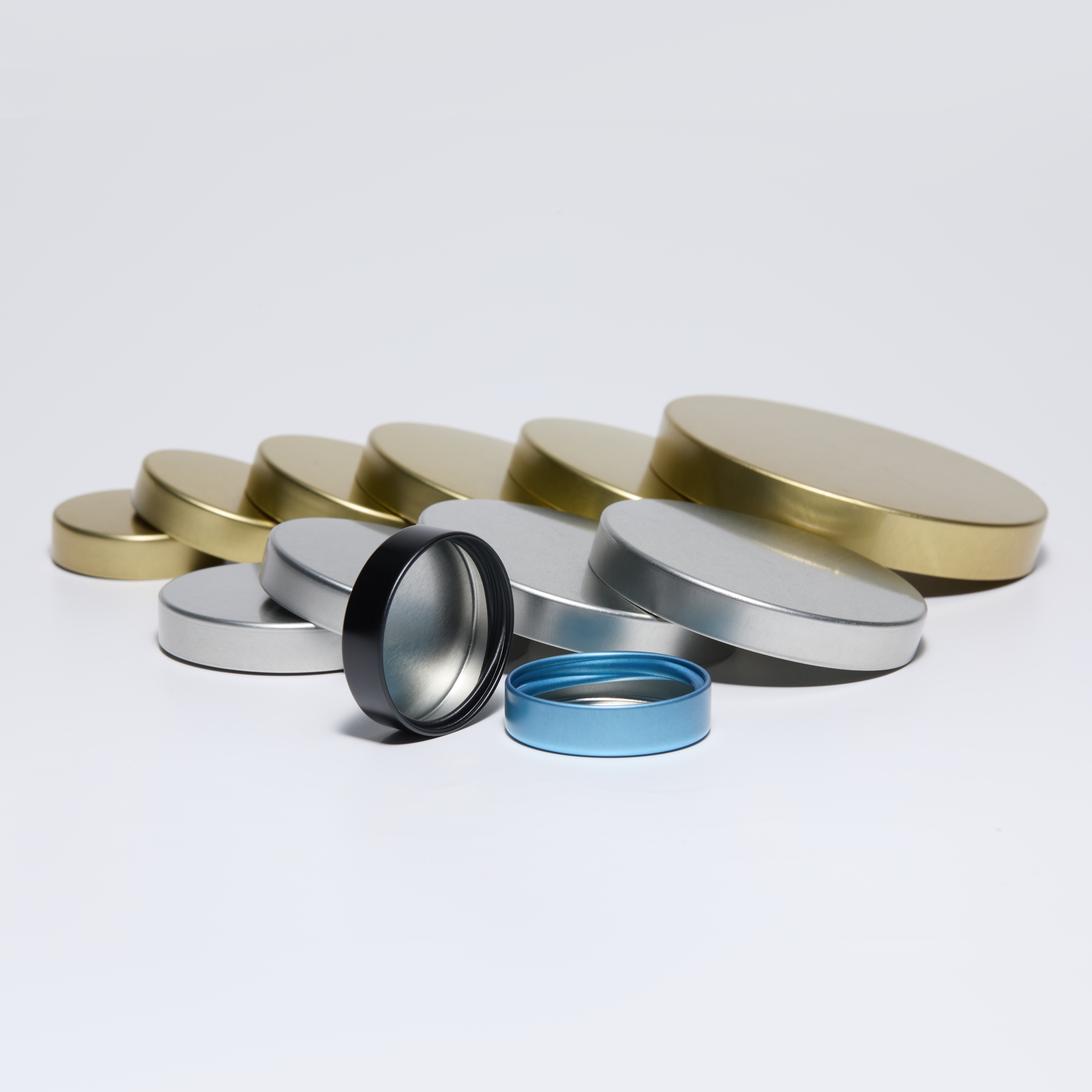
External thread caps serve as critical sealing components in pharmaceutical, nutraceutical, and food packaging industries where product integrity depends entirely on preventing contamination and moisture ingress. The leak-proof performance of these closures determines shelf life, regulatory compliance, and consumer safety across bottled supplements, liquid medications, and sensitive powders. Understanding how manufacturers test external thread caps for sealing reliability reveals the engineering rigor behind seemingly simple packaging components and helps procurement teams select closures that meet stringent quality standards.

Testing methodologies for external thread caps combine physical measurement, pressure differential analysis, and simulated environmental stress to verify hermetic sealing capability before closures reach production lines. Manufacturers employ standardized protocols developed by international standards organizations alongside proprietary quality assurance procedures that account for specific application requirements. These comprehensive evaluation systems assess not only initial seal integrity but also performance degradation under storage conditions, transportation vibration, and repeated opening cycles that reflect real-world usage patterns.
Thread Geometry Verification and Dimensional Accuracy Testing
Precision Measurement of Thread Profiles
Thread geometry testing for external thread caps begins with optical comparator systems and coordinate measuring machines that verify pitch diameter, thread depth, flank angle, and lead accuracy against engineering specifications. Manufacturers measure these parameters across random production samples using contact and non-contact metrology equipment calibrated to micron-level precision. Thread profile inspection ensures that external thread caps mate correctly with container neck finishes, creating the compression necessary for liner-to-sealing-surface contact that prevents leakage pathways.
Dimensional tolerance analysis examines how manufacturing variation affects sealing performance by testing caps at upper and lower specification limits with corresponding bottle finishes. Quality engineers document torque-to-seal relationships across dimensional ranges to establish application guidelines that account for real production variability. This testing phase identifies whether external thread caps maintain leak-proof performance despite normal manufacturing tolerances in both closure and container dimensions.
Surface Finish and Thread Root Inspection
Surface roughness measurement of thread flanks and roots detects manufacturing defects that could compromise seal integrity by creating microscopic channels for gas or liquid migration. Profilometers trace thread surfaces to quantify average roughness values and identify burrs, tool marks, or material inconsistencies that might puncture liner materials during application. Smooth thread surfaces in external thread caps reduce friction during installation while preventing liner damage that would create leak paths.
Thread root radius inspection verifies that the curved transition between thread flanks meets design specifications, as sharp corners can concentrate stress and cause premature liner failure under thermal cycling or pressure changes. Manufacturers use shadowgraph projection and digital imaging to measure root geometry on production samples, ensuring consistency that supports predictable sealing performance. This dimensional verification confirms that external thread caps will compress liner materials uniformly across the sealing surface rather than creating localized stress points.
Liner Material Compatibility and Seal Formation Testing
Liner Adhesion and Compression Set Evaluation
Testing liner performance within external thread caps involves measuring adhesion strength to the cap shell, compression set recovery after repeated closures, and chemical compatibility with packaged products. Laboratories subject assembled closures to peel tests that quantify liner-to-metal bond strength, ensuring gaskets remain attached during shipping and application. Compression set testing applies controlled force to liner materials, measures permanent deformation after stress removal, and calculates elastic recovery percentages that indicate long-term sealing capability.
Liner thickness uniformity testing uses ultrasonic gauges or micrometer measurements at multiple radial positions to verify consistent material distribution that produces even sealing pressure. Variations in liner thickness cause uneven compression during cap application, creating preferential leak paths where insufficient pressure fails to block permeation. Quality control protocols for external thread caps specify maximum thickness variation tolerances based on sealing performance data from application testing with representative bottle finishes and contents.
Chemical Resistance and Liner Stability Testing
Chemical compatibility testing exposes liner materials in external thread caps to actual or simulated product contact under accelerated conditions that compress months of shelf exposure into weeks of laboratory evaluation. Test protocols immerse assembled closures in representative formulations at elevated temperatures while monitoring liner swelling, softening, color change, and loss of mechanical properties that would compromise sealing. Different liner formulations suit different product chemistries, making compatibility verification essential for leak-proof performance in specific applications.
Extractables and leachables testing identifies compounds that might migrate from liner materials into packaged products, affecting both product quality and seal integrity as plasticizer loss hardens gaskets over time. Gas chromatography-mass spectrometry analysis of product samples stored in containers sealed with external thread caps quantifies migration levels and compares results against regulatory limits. This testing ensures that liner materials maintain both sealing performance and product safety throughout intended shelf life periods.
Pressure Differential and Vacuum Decay Testing Protocols
Positive Pressure Leak Detection Methods
Positive pressure testing subjects sealed containers with external thread caps to internal pressurization while submerging packages in water baths and observing for bubble formation that indicates leak paths. Test protocols specify pressure levels, duration, and acceptance criteria based on application requirements, with pharmaceutical packages typically tested at pressures exceeding anticipated storage and transportation stress. Automated pressure decay systems measure rate of pressure loss from sealed containers, calculating leak rates in standard cubic centimeters per second that quantify seal quality objectively.
Helium leak detection represents the most sensitive method for verifying hermetic sealing in external thread caps, using mass spectrometry to detect helium molecules escaping from pressurized packages at rates as low as 10^-9 standard cubic centimeters per second. Test chambers surround sealed containers with helium-sensitive detectors that identify even microscopic leak paths invisible to bubble testing. This method proves particularly valuable for validating external thread caps used in pharmaceutical applications where oxygen or moisture ingress at barely detectable rates could degrade sensitive active ingredients.
Vacuum Maintenance and Negative Pressure Testing
Vacuum decay testing evaluates how effectively external thread caps maintain negative pressure in containers sealed under partial vacuum, measuring pressure rise over time as air infiltrates through any imperfect seals. Sensitive pressure transducers monitor internal container pressure with millibar resolution, detecting seal defects that allow atmospheric infiltration. This testing method particularly suits applications where oxygen-sensitive products require modified atmosphere packaging, as even minor seal imperfections permit oxidation that compromises product stability.
Gross leak testing applies vacuum to the exterior of sealed containers with external thread caps while monitoring for rapid pressure equalization that indicates complete seal failure. Quality assurance protocols combine gross leak and fine leak testing to establish comprehensive sealing performance profiles that detect both catastrophic failures and subtle defects. Multi-stage testing regimens verify that external thread caps provide consistent leak-proof performance across production batches rather than occasional successful seals among variable quality output.
Environmental Stress and Durability Testing Programs
Thermal Cycling and Temperature Shock Protocols
Thermal cycling testing subjects containers sealed with external thread caps to repeated temperature transitions between extreme heat and cold that simulate transportation through different climate zones and seasonal storage condition changes. Test chambers cycle packages through temperature ranges specified in ASTM and ISO standards, typically spanning -20°C to 60°C across hundreds of cycles. Temperature changes cause differential expansion between metal caps, plastic bottles, and liner materials, potentially opening leak paths if material compatibility or design geometry proves inadequate.
Temperature shock testing applies rapid temperature transitions that stress material interfaces more severely than gradual cycling, revealing seal vulnerabilities that might not appear under slower environmental changes. External thread caps must maintain compression on liner materials despite rapid thermal expansion and contraction that could loosen the closure-container interface. Post-cycling leak testing verifies that seals remain intact after thermal stress, with pressure decay or dye penetration methods confirming continued barrier performance.
Mechanical Shock and Vibration Simulation
Vibration testing replicates transportation stress by mounting sealed containers with external thread caps on shaker tables that simulate truck, rail, and air freight vibration profiles defined in ISTA and ASTM shipping standards. Test protocols specify vibration frequency, amplitude, and duration based on distribution channel analysis, typically running packages through several hours of multi-axis vibration. This mechanical stress tests whether external thread caps maintain adequate torque and liner compression despite repetitive shock that could loosen closures or disrupt seal interfaces.
Drop testing evaluates seal integrity after impact events by dropping packages from specified heights onto hard surfaces at various orientations. Test engineers inspect containers for leakage immediately after impact and after allowing time for slow seepage to become apparent. External thread caps must absorb impact energy without cracking, permanent deformation, or thread stripping that would compromise hermetic sealing. Multiple drop repetitions establish failure thresholds and validate that closure designs provide adequate safety margins for typical handling roughness.
Application Torque and Removal Force Characterization
Optimal Torque Range Determination
Torque testing establishes the force required to achieve leak-proof sealing with external thread caps while avoiding over-tightening that could damage containers, strip threads, or compress liners beyond elastic limits. Torque-angle curves generated during controlled closure application reveal how sealing force builds as caps rotate onto bottle finishes, identifying the torque window that produces reliable seals without mechanical damage. Electronic torque meters record application force across production trials with various bottle materials and fill levels to define recommended torque specifications.
Under-torque testing deliberately applies insufficient closure force to external thread caps, then subjects packages to leak testing that quantifies the relationship between application torque and seal reliability. This data establishes minimum torque requirements that capping equipment must consistently deliver to ensure leak-proof performance. Over-torque testing similarly evaluates maximum safe application force before thread damage, liner extrusion, or container deformation occurs, defining upper control limits for automated capping machinery.
Removal Torque and Tamper Evidence Verification
Removal torque measurement quantifies the force consumers require to open containers sealed with external thread caps, balancing leak-proof security against accessibility for intended users. Test protocols measure breakaway torque for initial opening and running torque for subsequent cap rotation, ensuring external thread caps remain user-friendly while maintaining hermetic seals during storage. Child-resistant closures require specific torque ranges that prevent access by children while remaining openable by adults, necessitating precise testing of torque characteristics across demographic groups.
Tamper-evident feature testing verifies that external thread caps with security bands or seals provide visible evidence of package opening, maintaining product integrity assurance throughout distribution channels. Quality protocols test band retention during normal handling, breakaway force during intentional opening, and visual evidence clarity after tampering. This testing ensures external thread caps fulfill both sealing and security functions critical for pharmaceutical and nutraceutical applications where product authenticity concerns demand tamper-evident packaging.
FAQ
What pressure levels are typically used when testing external thread caps for pharmaceutical applications?
Pharmaceutical testing of external thread caps typically employs positive pressure ranges from 0.5 to 2.0 bar (7 to 29 psi) maintained for durations between 30 seconds and several minutes, depending on package size and product sensitivity. These pressures exceed normal storage and transportation stress to provide safety margins that account for altitude changes during air freight, temperature-induced internal pressure variations, and handling impacts. Regulatory guidance documents and pharmacopeia standards specify minimum test pressures for different dosage forms, with particularly sensitive products requiring more stringent leak detection thresholds measured through helium mass spectrometry at sensitivity levels detecting leak rates below 10^-6 standard cubic centimeters per second.
How do manufacturers ensure consistent liner compression across production batches of external thread caps?
Manufacturers control liner compression consistency in external thread caps through statistical process control of liner thickness, cap shell dimensions, and adhesive application patterns, with automated inspection systems measuring these parameters on every production line. In-line torque monitoring during trial capping runs verifies that dimensional combinations produce target compression values, while periodic destructive testing physically measures liner deformation under standardized application torque. Process capability studies establish that manufacturing variation remains well within specification limits that maintain leak-proof performance, typically targeting capability indices above 1.33 to ensure six-sigma quality levels where seal failures occur at rates below 3.4 defects per million applications.
What role does thread pitch play in the leak-proof performance of external thread caps?
Thread pitch in external thread caps determines how many rotations compress the liner against the container sealing surface, with finer pitches requiring more turns but distributing sealing force more gradually and uniformly. Standard pharmaceutical finishes like 38-400 and 45-400 specify pitch dimensions that balance application speed against sealing reliability, with testing demonstrating that proper pitch matching between caps and containers produces consistent liner compression across the full sealing surface. Mismatched pitch between external thread caps and bottle finishes causes incomplete thread engagement that reduces effective sealing area and creates preferential leak paths, making dimensional verification of both components essential for leak-proof performance validation.
How frequently should external thread caps undergo leak testing during production?
Production leak testing frequency for external thread caps follows risk-based sampling plans specified in quality management systems, typically testing random samples from each production batch at rates between 0.1% and 4% depending on process capability history and application criticality. High-risk pharmaceutical applications may require 100% leak testing using automated in-line systems that pressure-test every sealed container, while established processes with demonstrated capability may employ reduced sampling frequencies validated through statistical quality control data. Regardless of routine sampling rates, process changes including material lot changes, tooling adjustments, or equipment modifications trigger increased testing until stability verification confirms continued leak-proof performance at historical quality levels.
Table of Contents
- Thread Geometry Verification and Dimensional Accuracy Testing
- Liner Material Compatibility and Seal Formation Testing
- Pressure Differential and Vacuum Decay Testing Protocols
- Environmental Stress and Durability Testing Programs
- Application Torque and Removal Force Characterization
-
FAQ
- What pressure levels are typically used when testing external thread caps for pharmaceutical applications?
- How do manufacturers ensure consistent liner compression across production batches of external thread caps?
- What role does thread pitch play in the leak-proof performance of external thread caps?
- How frequently should external thread caps undergo leak testing during production?